
Induction hardening and hardening machines
Induction hardening
Induction hardening is a technological method of creating a hard surface layer on a steel product.
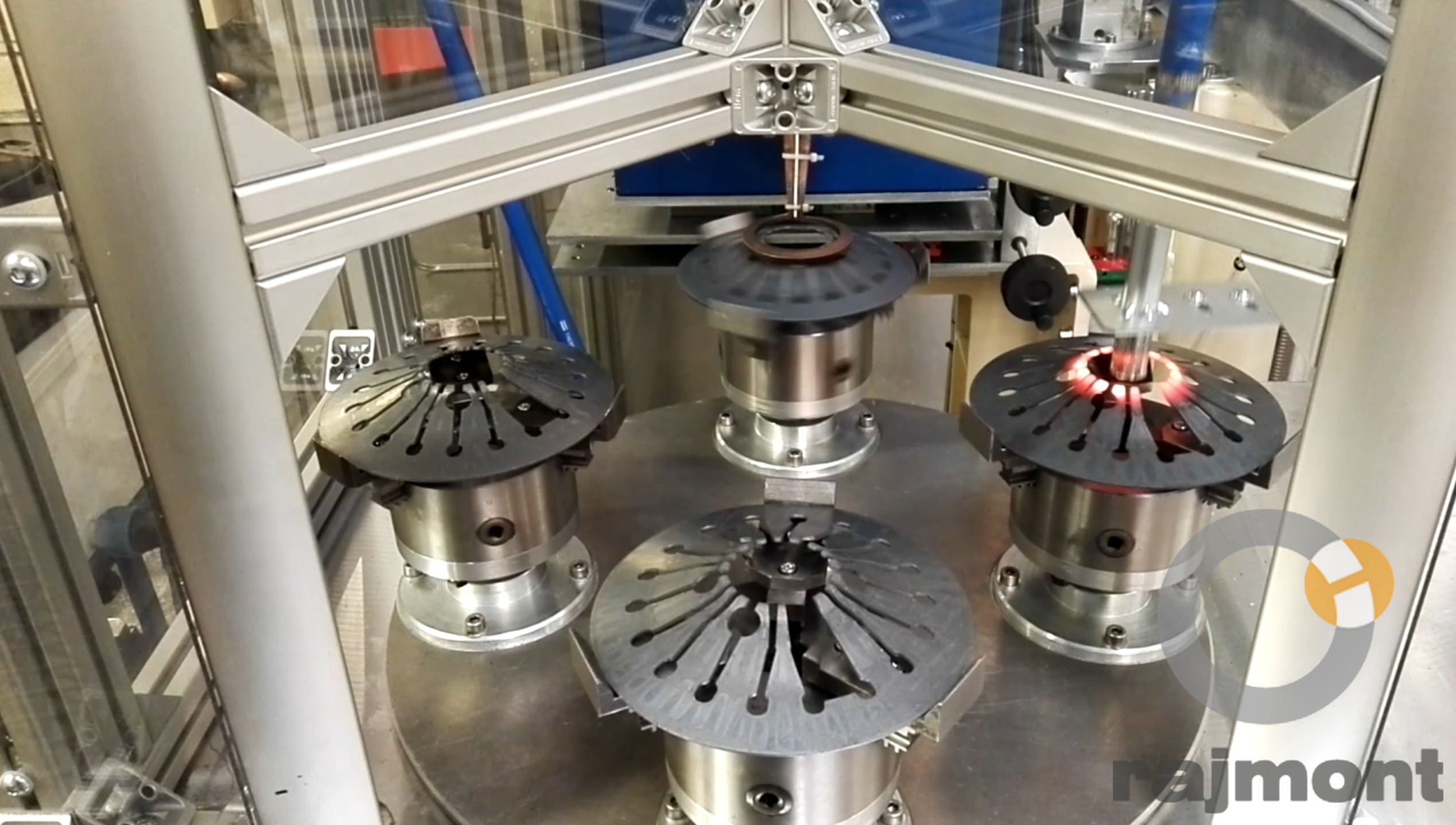
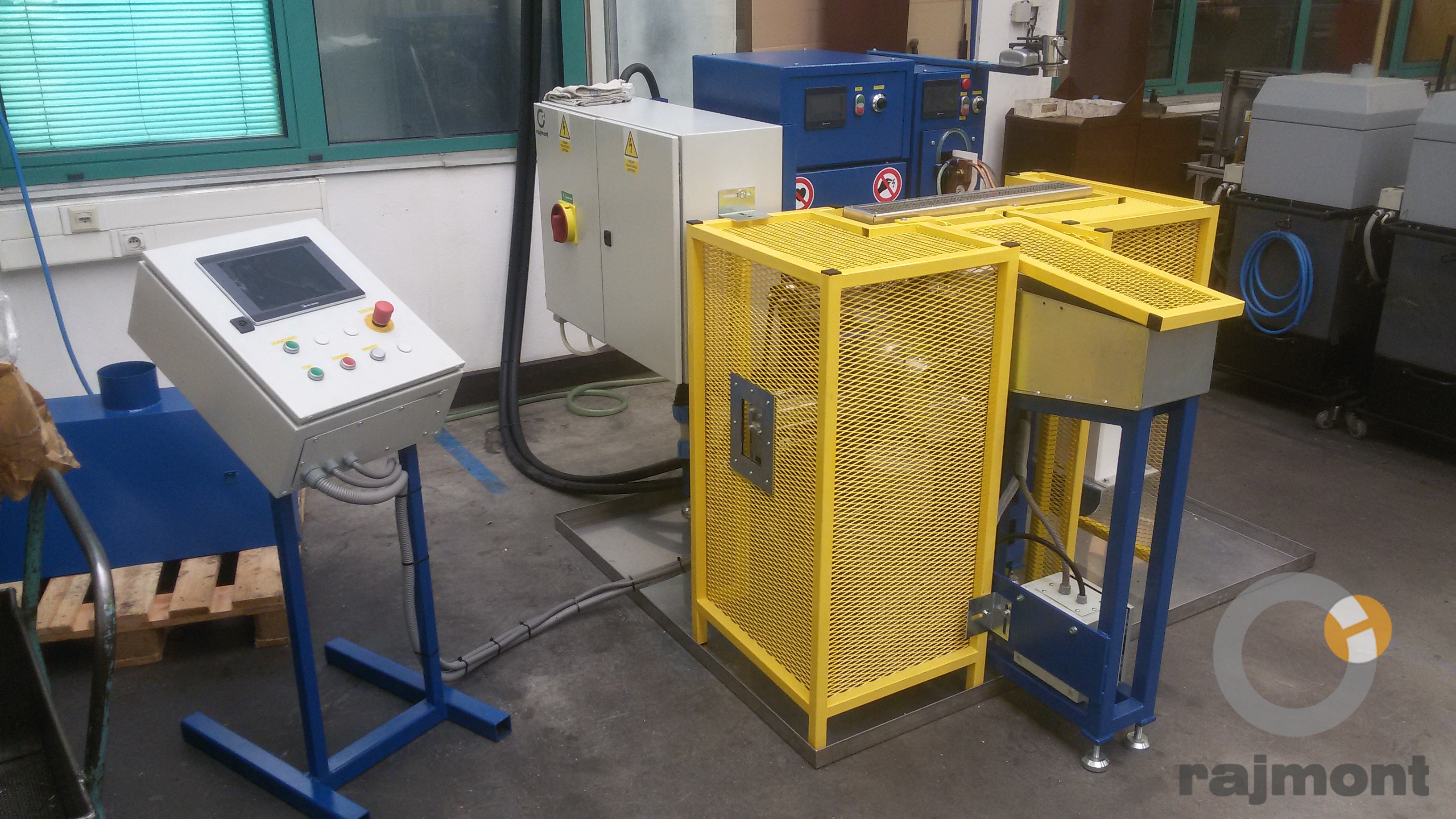
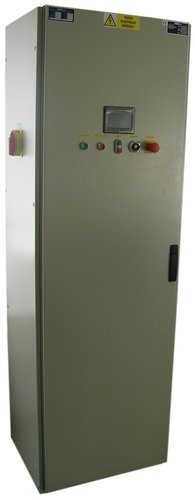
Single-purpose Rajmont hardening machines designed for the heat treatment of series-produced parts.
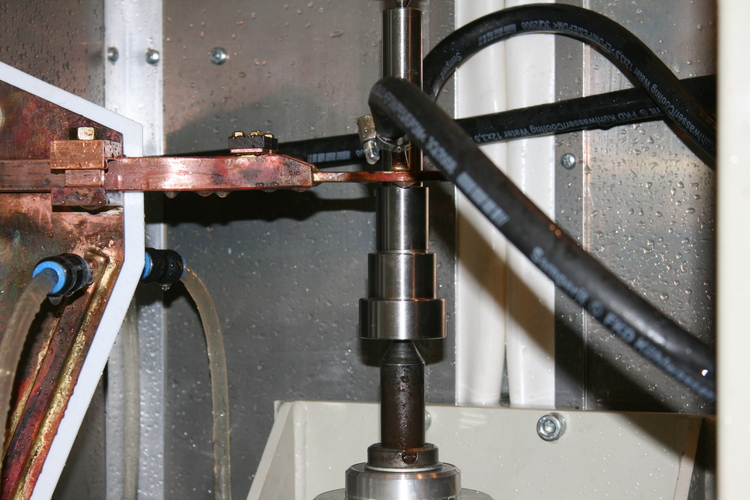
Induction hardening is based on rapid heating by means of medium or high frequency using an inductor whose shape is adapted to the hardened part or its section. When alternating current passes through the inductor, an alternating magnetic field is induced on the surface of the hardened part, generating eddy currents. These currents very quickly heat the surface of the part to the hardening temperature, after which it is hardened by rapid quenching.
High-frequency and medium-frequency generators for induction hardening are based on the same design as high-power welding generators. The key technological requirement is parameter stability, above all of the output power and frequency during the induction heating process. For automated hardening processes in series production using hardening machines, another important criterion is the ramp-up time to the required power. HFR generators reach the required power within 100 milliseconds as standard, with any output inductor.
630kW Rajmont SFR630 induction hardening generator
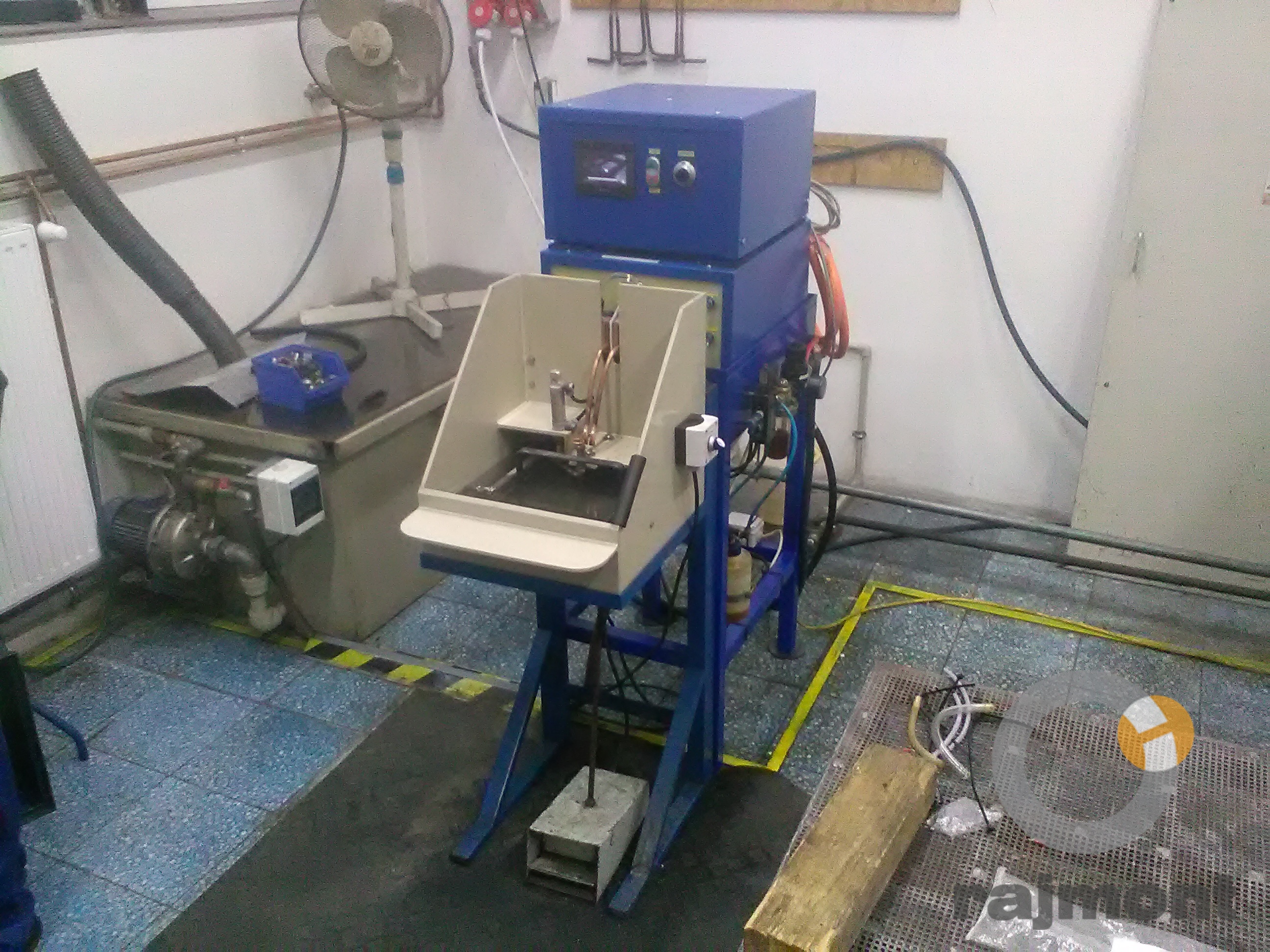
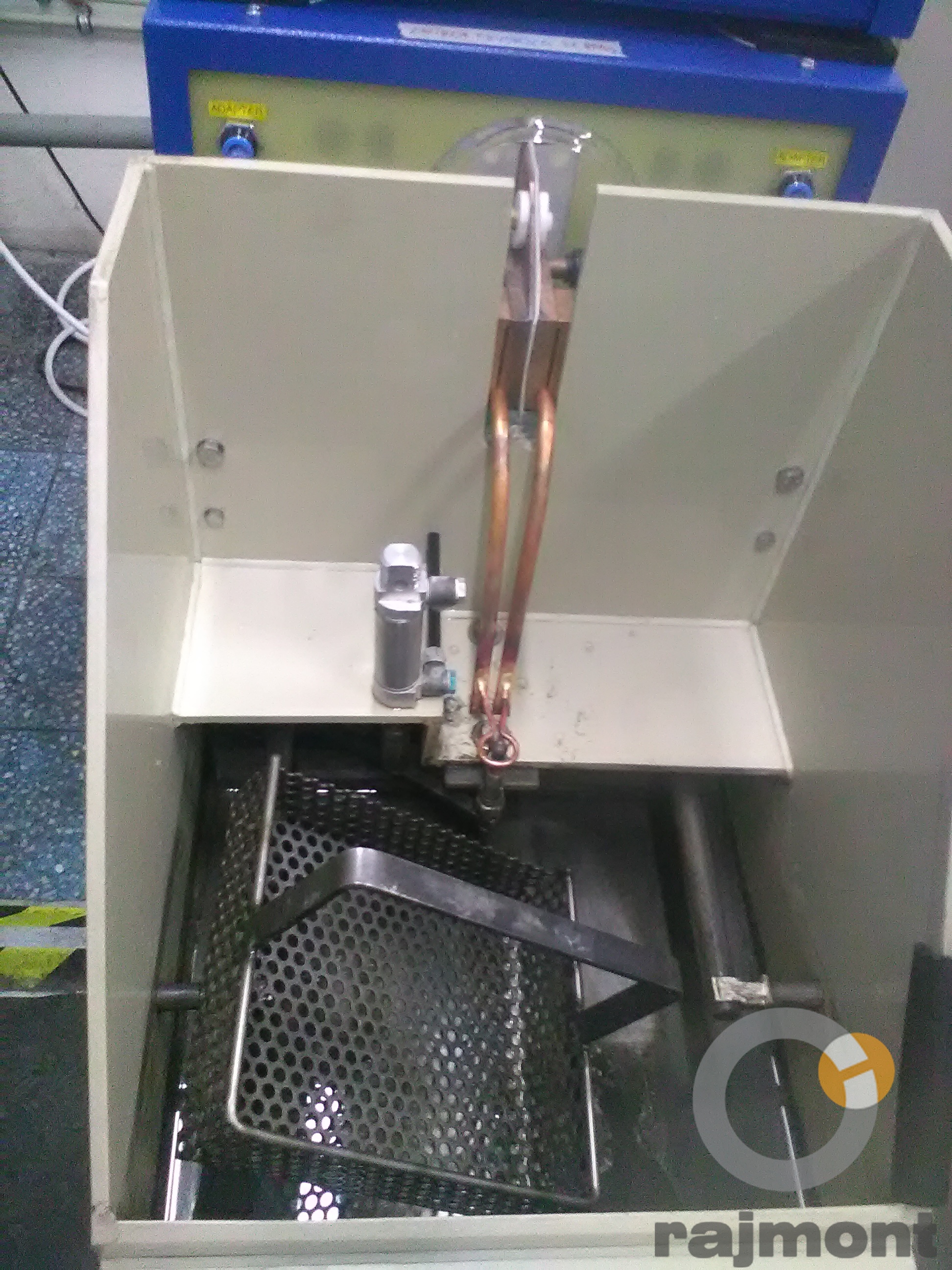
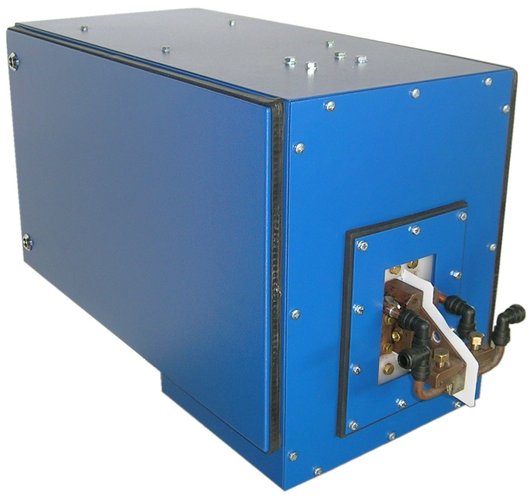
Rajmont hardening fixtures for high-frequency heating.
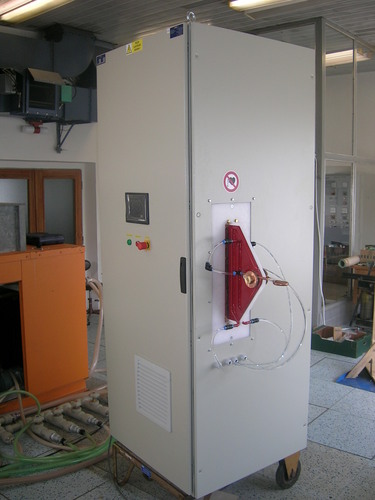
Rajmont s.r.o. has developed high-frequency and medium-frequency power sources for induction hardening, induction heating and induction soldering in several power levels to cover demand across a wide range of production technologies.
Basic range of high-frequency generators for induction hardening:
| Generator type | Power [kW] | Frequency | Cooling water consumption |
| HFR 15 | 15 | 50-500 kHz | 10 Lt./ Max. 25°C |
| HFR 25 | 25 | 50-500 kHz | 15 Lt./ Max. 25°C |
| HFR 50 | 50 | 50-500 kHz | 40 Lt./ Max. 25°C |
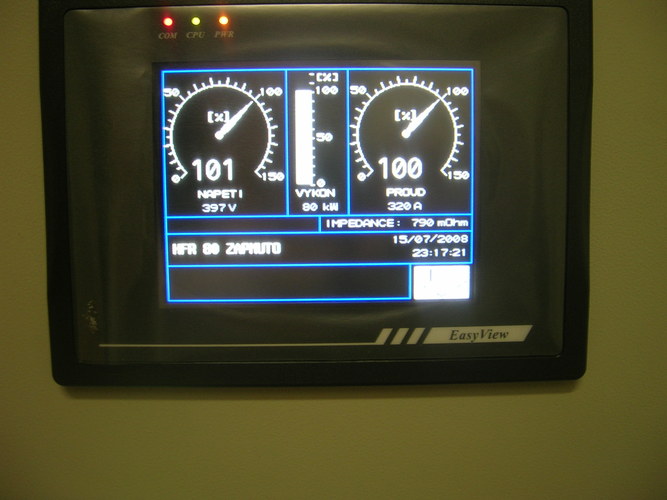
| HFR 80 | 80 | 50-500 kHz | 70 Lt./ Max. 25°C |
|
Generators can also be supplied as standard up to 350 kW and 800 kHz. |
|||
Basic range of medium-frequency generators for induction hardening:
| Generator type | Power [kW] | Frequency | Cooling water consumption |
| SFR 100 | 100 | 5-50 kHz | 50 Lt./ Max. 25°C |
| SFR 150 | 150 | 5-50 kHz | 70 Lt./ Max. 25°C |
| SFR 200 | 200 | 5-50 kHz | 90 Lt./ Max. 25°C |
| SFR 250 | 250 | 5-50 kHz | 110 Lt./ Max. 25°C |
| SFR 350 | 350 | 5-50 kHz | 150 Lt./ Max. 25°C |
|
Generators can also be supplied as standard in other power and frequency ranges. |
|||
Reasons to use high-frequency and medium-frequency generators for induction hardening
- no contact is required between the processed material and the coil
- high power density and heating speed
- good control of metal temperature
- precise definition of heated zones
- simplicity of operation
- great flexibility of regulation
- good efficiency
- good working conditions and minimal negative environmental impact
The highlighted points directly determine the irreplaceability of induction heating in hardening technology, because without these prerequisites some of today's structural components and assemblies simply could not be produced. For example, hardening a turbocharger shaft to a depth of 1-1.5mm to the required hardness of +-5 HRC degrees in repeated production series would be impossible with a gas burner or a resistance furnace.
Advantages of fully transistor-based HFR generators for induction hardening
Advantages of HFR transistor generators:
- the ability to regulate HF power from 0 to 100% while maintaining parameter stability. This is extremely important above all in the automotive industry, where every component must have a clearly demonstrable "history" according to the applicable standards.
- the HF generator is powered by a switched-mode DC supply, because we deliberately avoided thyristor-based supplies, where regulation is limited to 20 to 100% of power and the heating quality varies as the power increases.
The role of the DC supply in the described solid-state generator is to:
- galvanically isolate the live parts of the generator from the mains supply at high frequency
- deliver the required direct current and voltage to the power unit of the HF generator
- continuously regulate the current, voltage or power, and also switch off the energy supply to the power unit.
Cooling circuit with heat exchanger
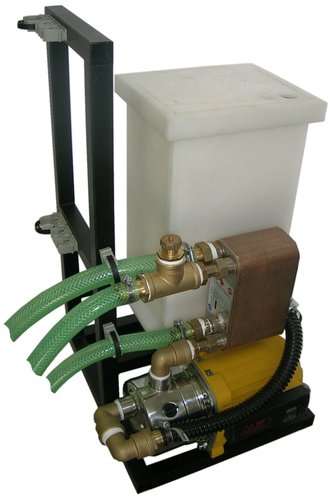
To ensure heat removal from the internal parts of the HF generator, we developed our own internal cooling circuit using demineralised water with a heat exchanger, through which the customer can provide cooling. This guarantees long-term constant quality of the cooling medium without the risk of limescale and other impurities. The design of this system is engineered to minimise installation dimensions and ensure long-term reliability.
Photos
Video
Enquiry form
Go to: ↑ Content ↑ top of the page ↑ homepage ↓ search ↓ navigation


